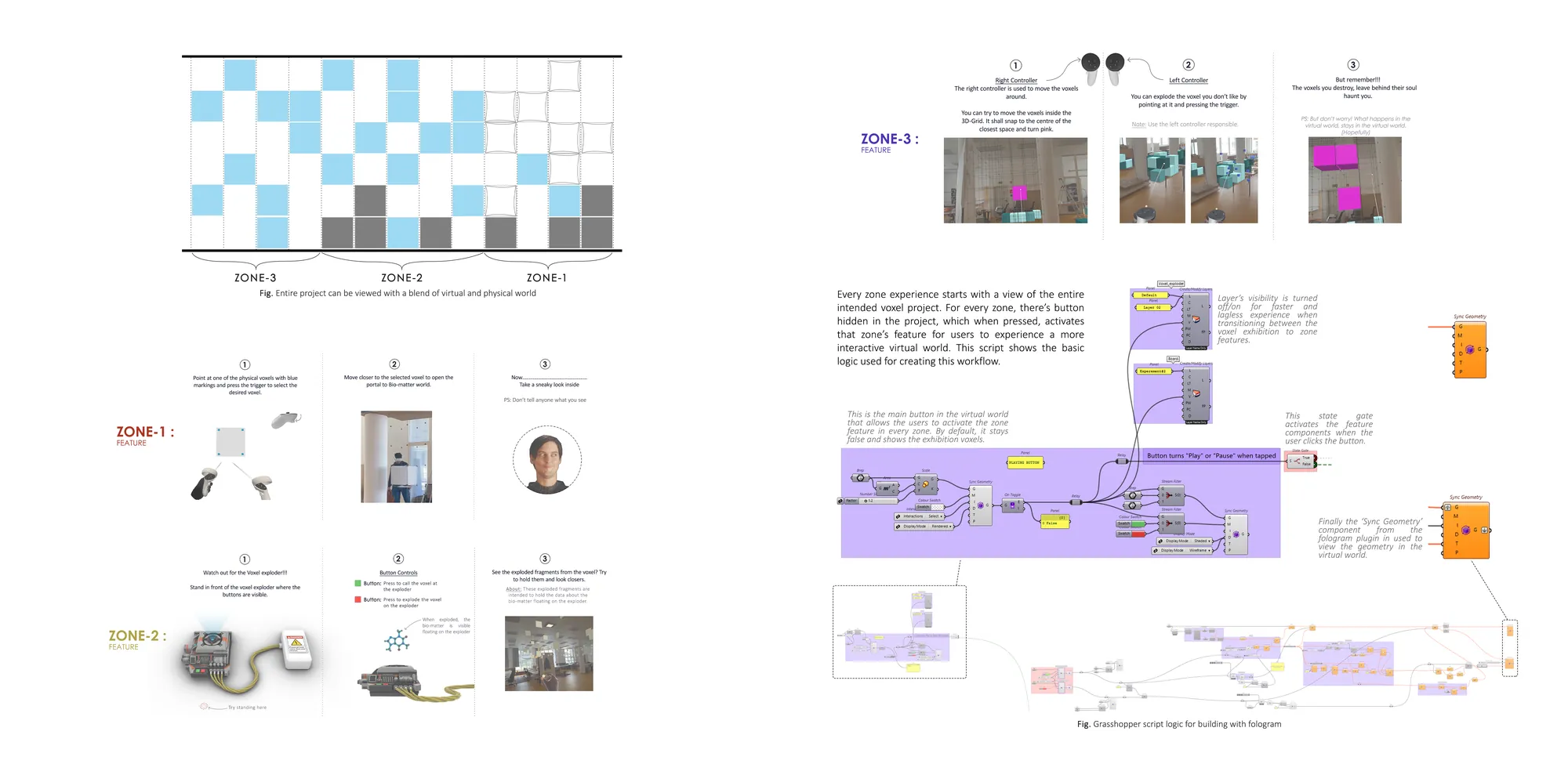
This project, “VOXEL”, experiments with creating an immersive mixed-reality experience for the Meta Quest 3. It transforms a physical studio into an interactive, gamified environment by dividing it into three distinct zones. Using Rhino + Grasshopper and Fologram, the project explores the blend of physical and virtual voxels, allowing users to “sneak-peek” into portals, “explode” data-voxels to reveal hidden bio-matter, and interact with a dynamic stream of global virtual data.
Every zone opens on a view of the whole intended voxel project. Hidden in each is a button that, when pressed, activates that zone’s feature — so the exhibition reads as one continuous piece rather than three separate demos.
- RhinocerosBase geometry and voxel grid
- GrasshopperInteraction logic and state gates
- FologramMixed-reality sync to the headset
- Type
- Group project
- Team
- Hrithik Shetty, Tareef Alsyoufi
- Collaboration
- TH OWL, Detmold
- Location
- Detmold, Germany
- Course
- TH OWL — MID Computational Design
The three zones
Zone 1 — Portals. Point at one of the physical voxels carrying blue markings and pull the trigger to select it. Move closer and the portal to the bio-matter world opens; take a look inside.
Zone 2 — The voxel exploder. Stand in front of the exploder where the buttons are visible. A green button calls a voxel to the machine, a red one detonates it — and the fragments left floating hold the data about the bio-matter.
Zone 3 — Building with voxels. The right controller moves voxels around the 3D grid, snapping each to the centre of the nearest cell and turning it pink. The left controller destroys the ones you don’t want — though the voxels you destroy leave their soul behind to haunt you.
Techniques
- Sync Geometry (Fologram)
- State gates
- Layer visibility toggling
- Controller trigger events
- Grid snapping
- Physical–virtual registration