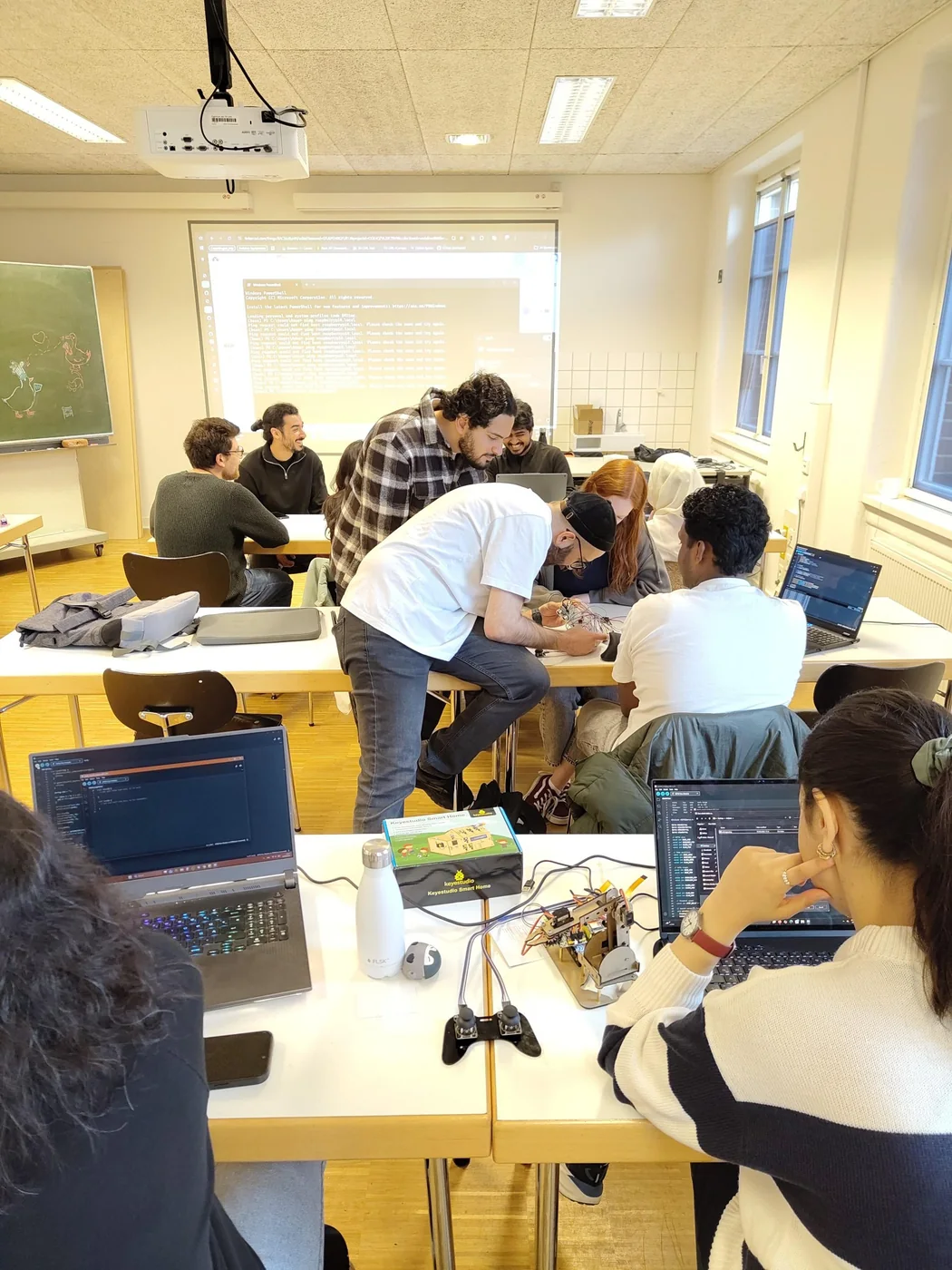
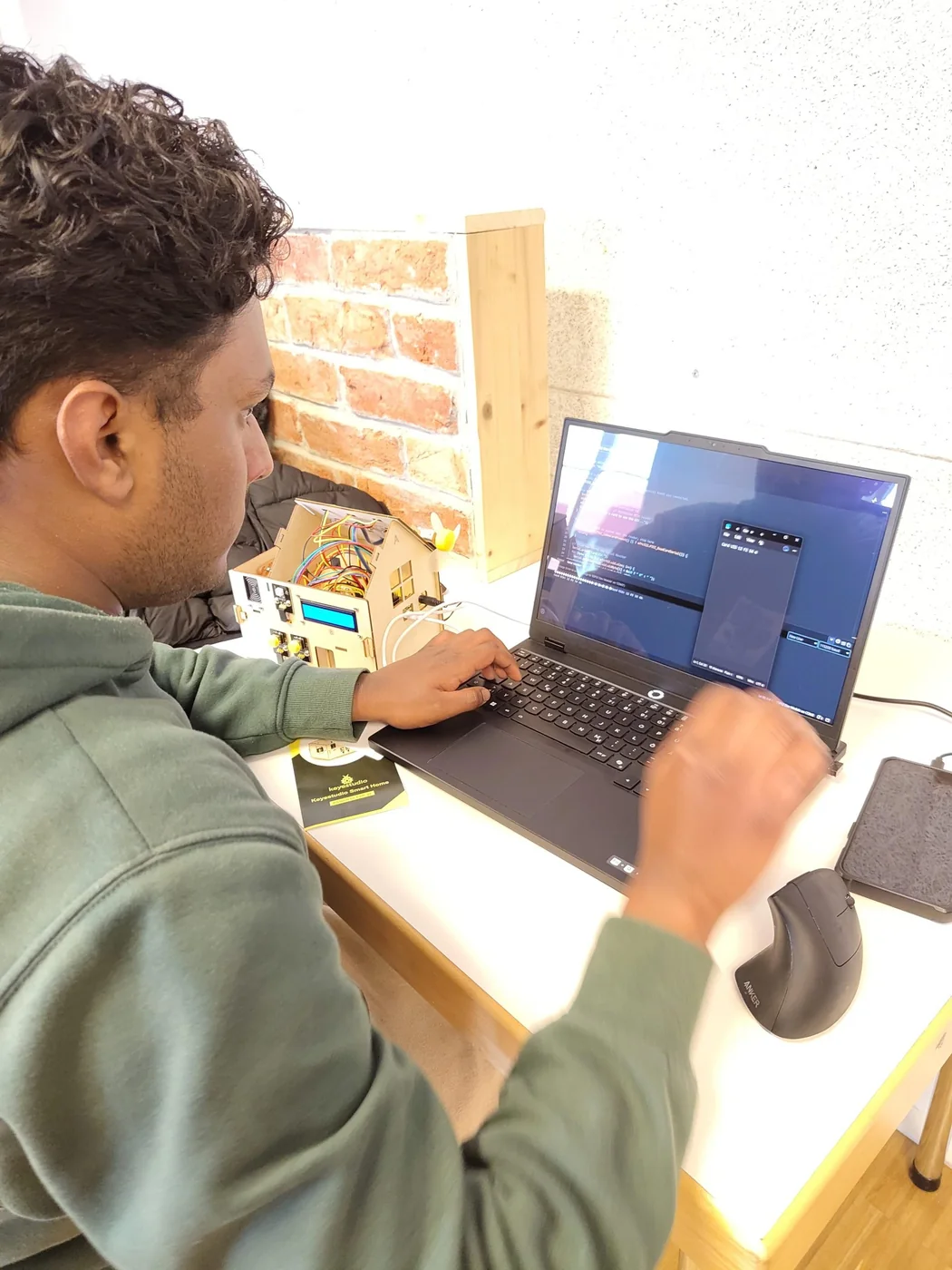
DIY Robots in Architecture was a four-day intensive workshop during the Detmolder Räume week at the Detmold School of Design, TH OWL. I led it with Yusuf Aykin and Prof. Hans Sachs for sixteen participants drawn from all of the design courses — architecture, interior architecture and the integrated design master.
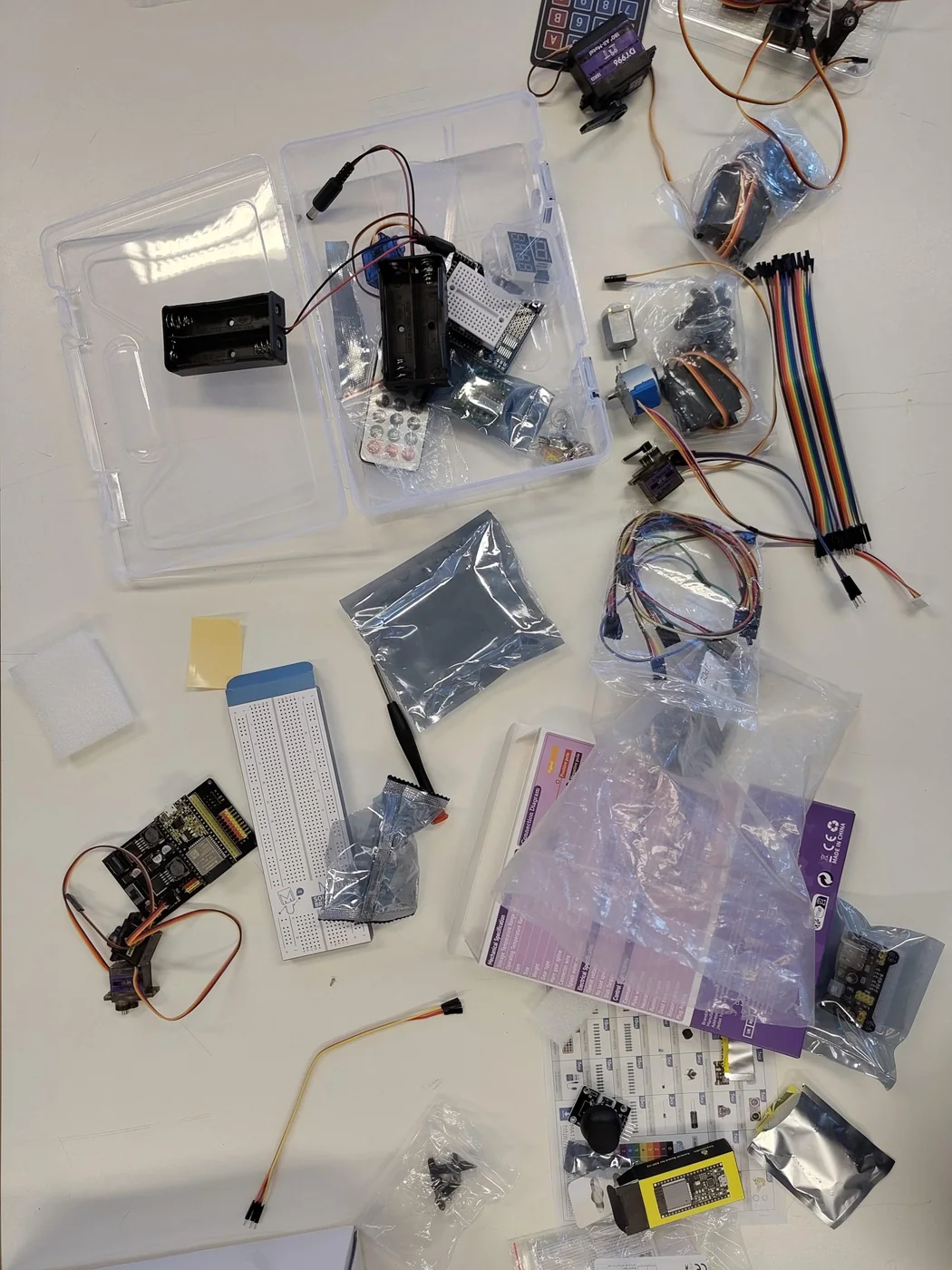
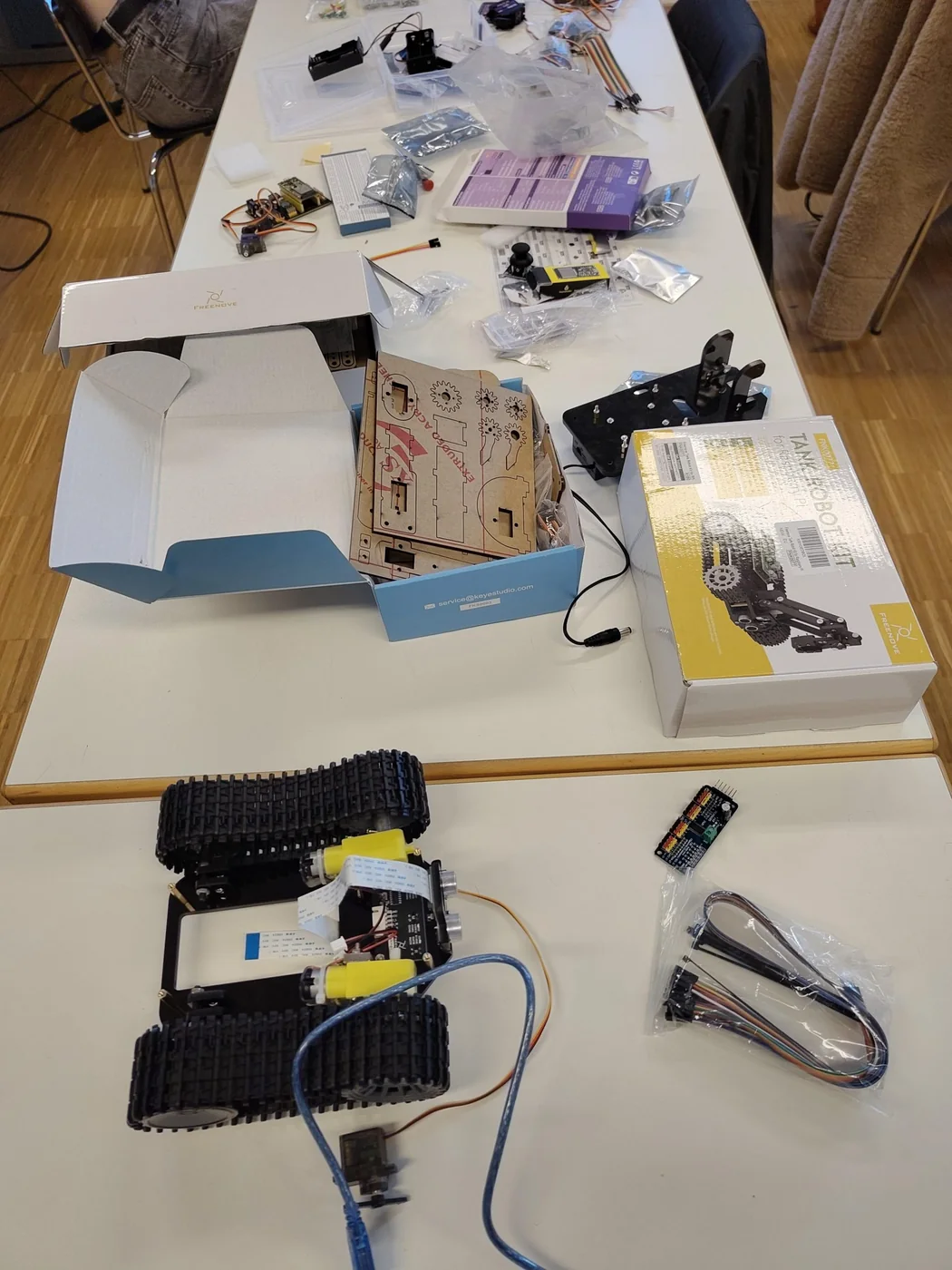
No prior programming or robotics experience was required, which was the point. Students built, assembled, programmed and iterated their own robotic tools and vehicles out of low-cost, open-source hardware: Arduino-powered rovers at one end of the room, self-assembled robotic arms at the other. The workshop ran on a DIY and prototyping ethos, using cheap and accessible technology as a way into automated design processes rather than as an end in itself.
By the end of the week a large proportion of the bachelor students were programming independently — from no code at all on Monday. That, more than any one machine that drove across a table, is what the four days were for.
- Type
- Workshop — taught
- Role
- Workshop lead, with Yusuf Aykin and Hans Sachs
- When
- May 2026, Detmolder Räume week
- Module
- BA6010 · 4 ECTS · 2 SWS
- Participants
- 16, from all design disciplines
- Where
- Detmold School of Design, TH OWL
- Hardware
- Arduino, open-source kits, self-assembled arms
How the four days ran
Each day paired a short input with a long build. Students started from a working example — a motor that turns, a sensor that reads — and then changed it until it did something they had chosen themselves. Debugging was done at the table, out loud, which is how the room taught itself faster than we could have taught it.
Because the hardware was cheap and open, nobody was afraid of it. A broken part was a part you replaced, not a piece of laboratory equipment you had to apologise for — and that is what let people who had never written a line of code take a machine apart on the second morning.
What came out of it
- Arduino-powered rovers
- Self-assembled robotic arms
- Custom end-effectors
- Sensor-driven behaviours
- Students programming independently